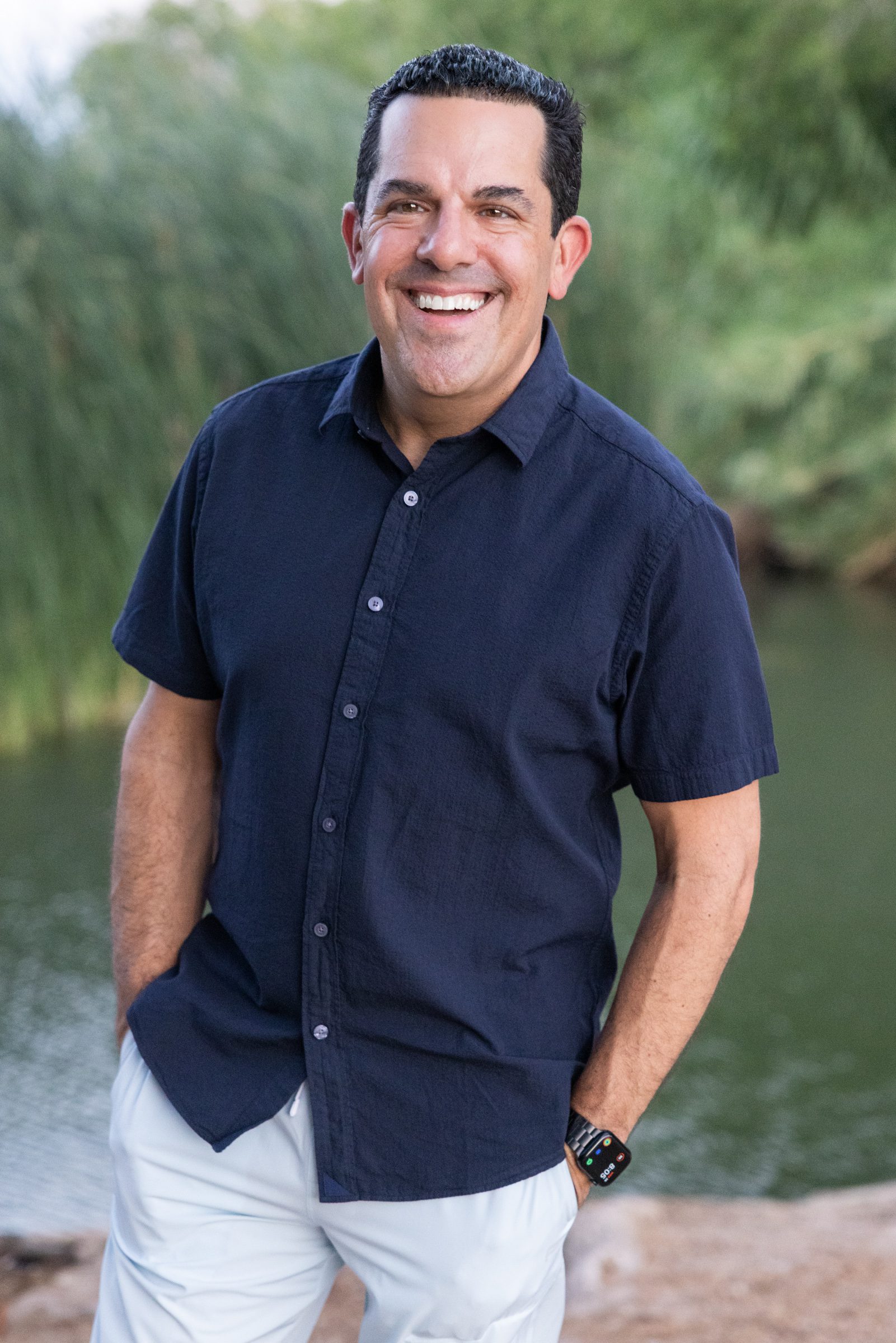


US Open 2025 photography is more than just covering a tennis tournament — it’s about capturing action, atmosphere, and artistry all at once. As a Las Vegas event photographer, I’m often working concerts and corporate events close to home. But every so often I get the privilege of stepping onto a major national stage — and this year, that meant my eighth time at the US Open. Coming home to New York and walking into the tennis center is always emotional, a reminder of how this tournament has been a part of my life since I was a teenager.
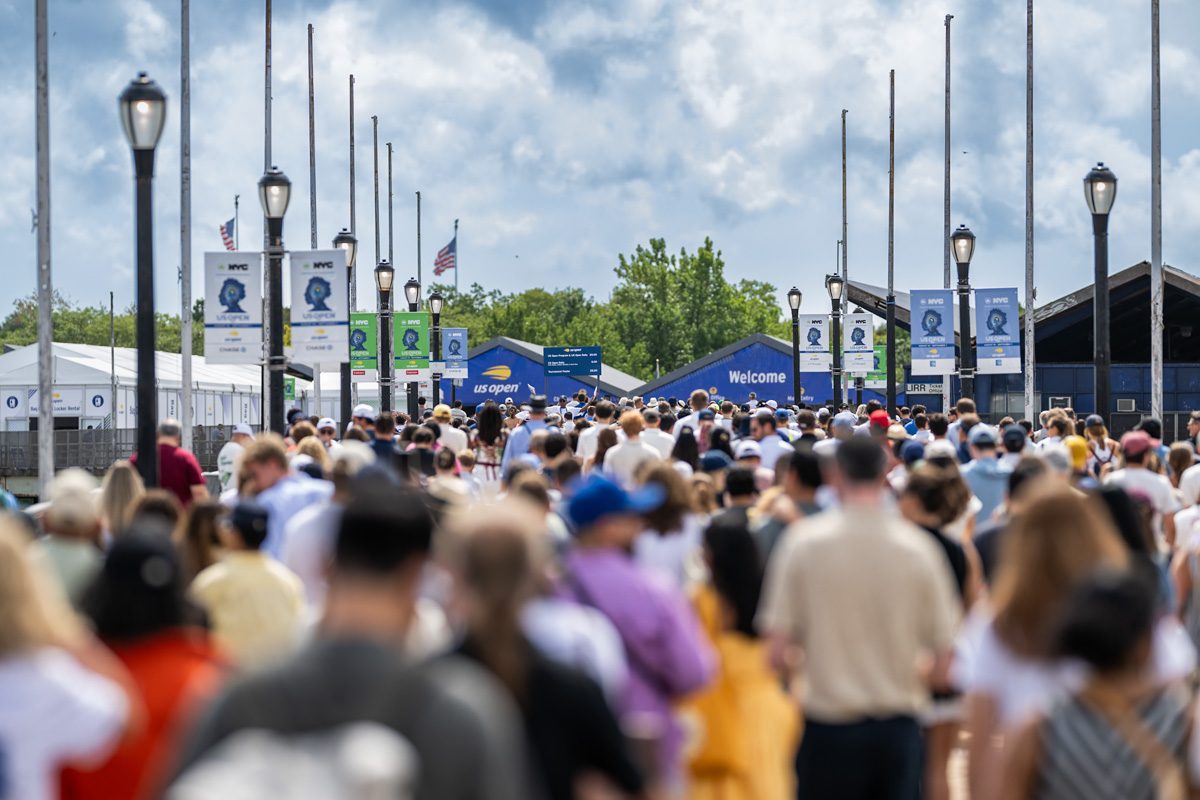
More Than Just Tennis
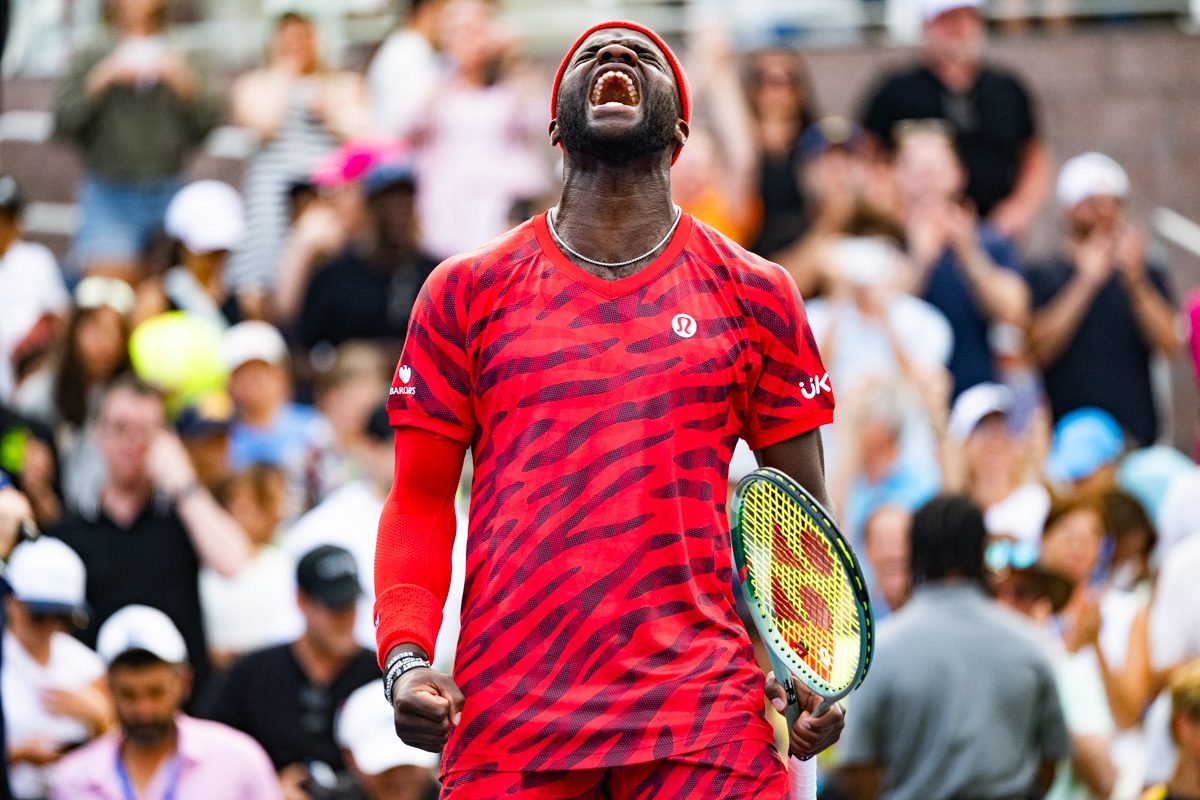
For me, the Open isn’t just about forehands and backhands. It’s reactions, connections, the breath between points — that’s what I’m chasing as I move through the grounds. The fan moments are where the heartbeat lives.
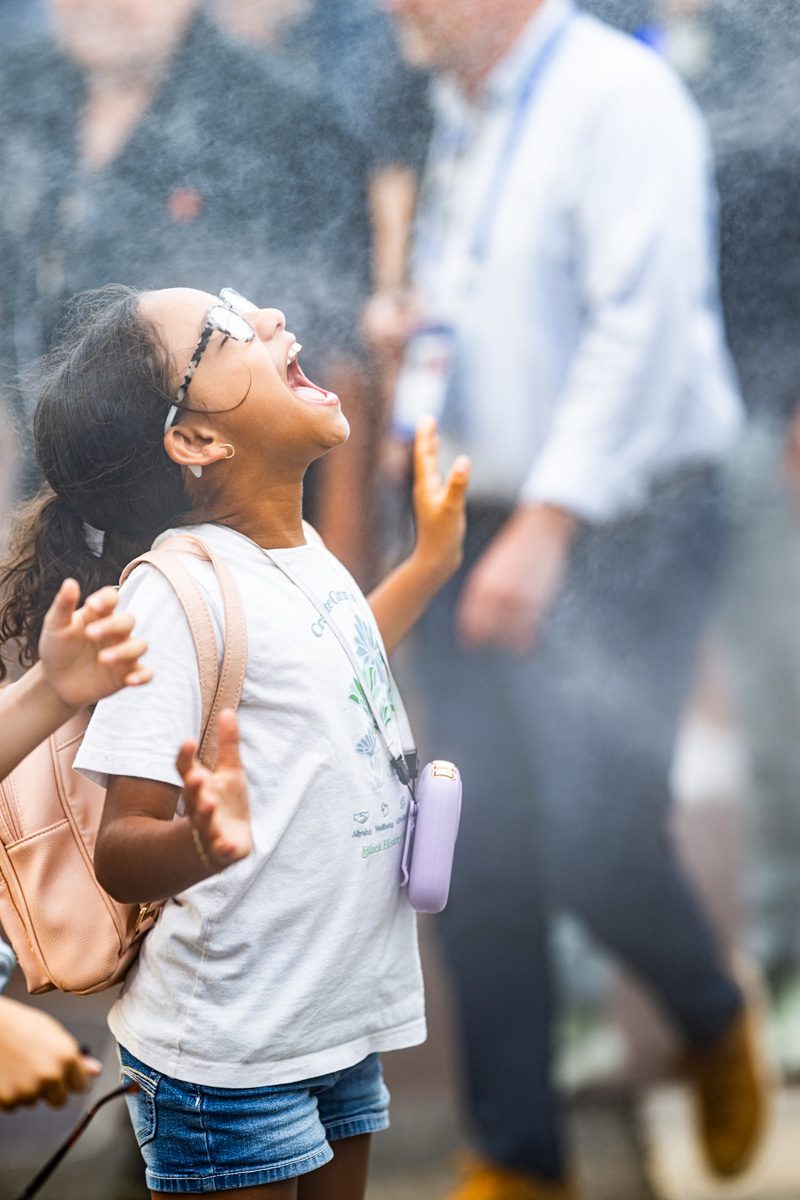
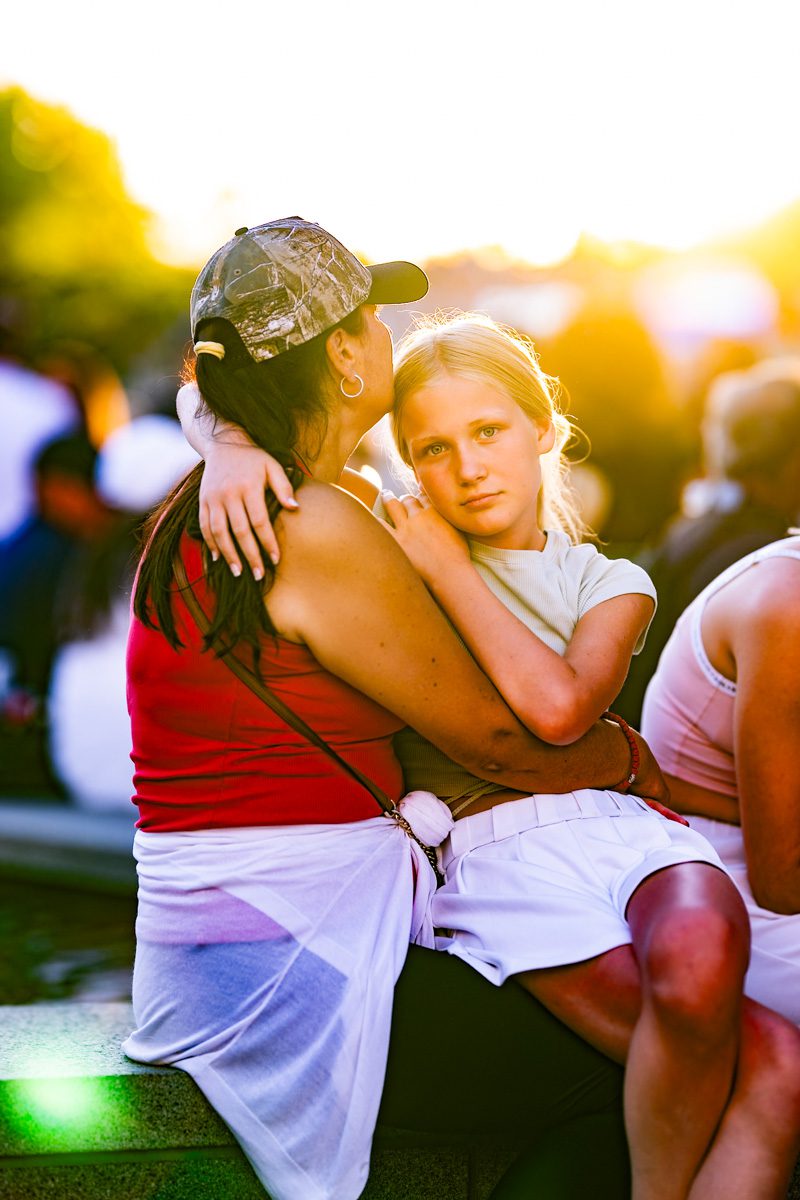
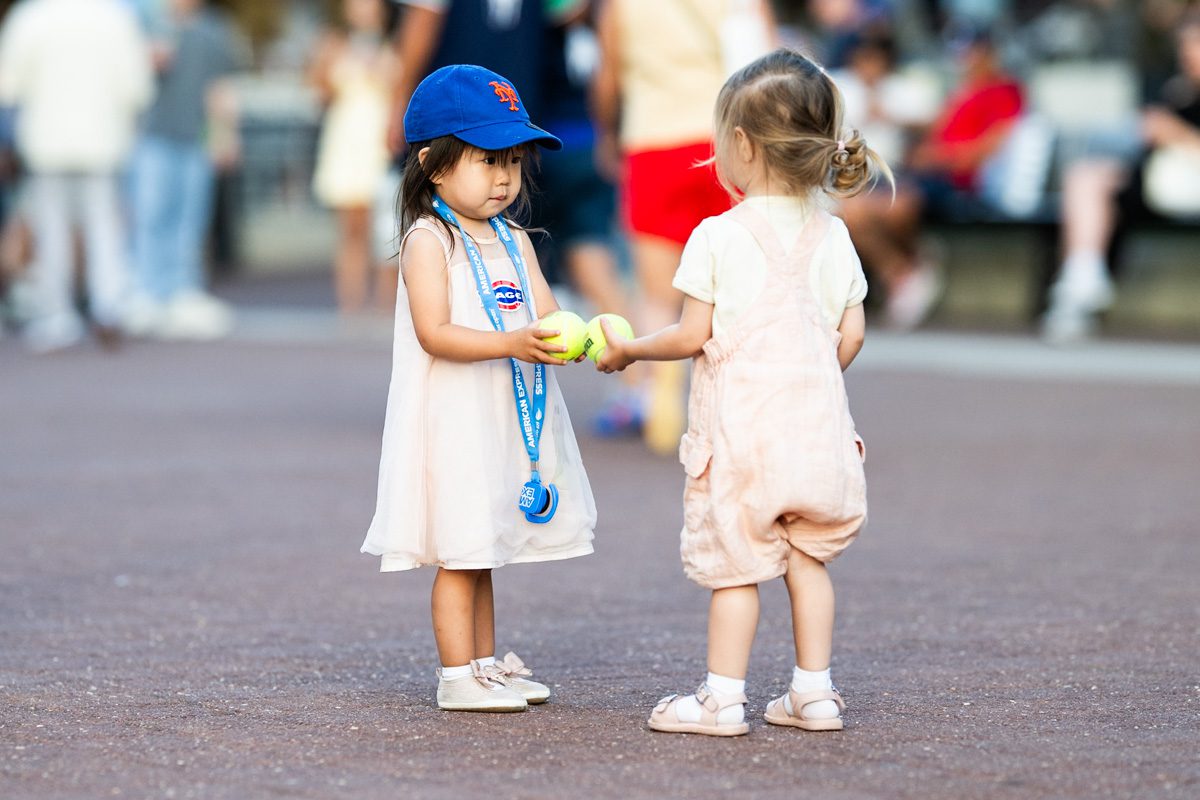
Crowds are a story too. Sometimes I’ll drag the shutter to show motion, other times I’ll freeze the geometry — two very different ways of telling the story of the US Open fan experience.
Court Craft: The Challenge of US Open 2025 Photography

Action is the heartbeat. Each stadium has its quirks. Grandstand gives you those wide, sweeping crowd shots with its open sides — a place where I’ll go wider to pack in the sea of fans.
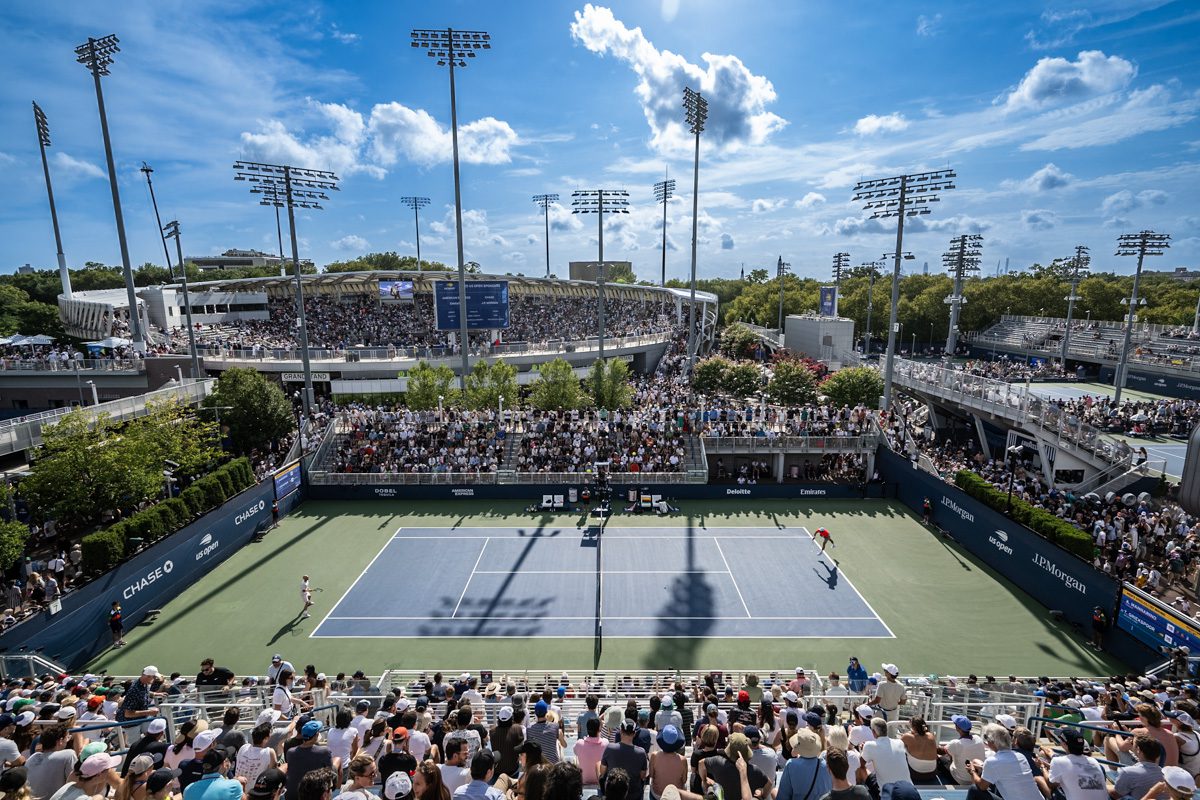
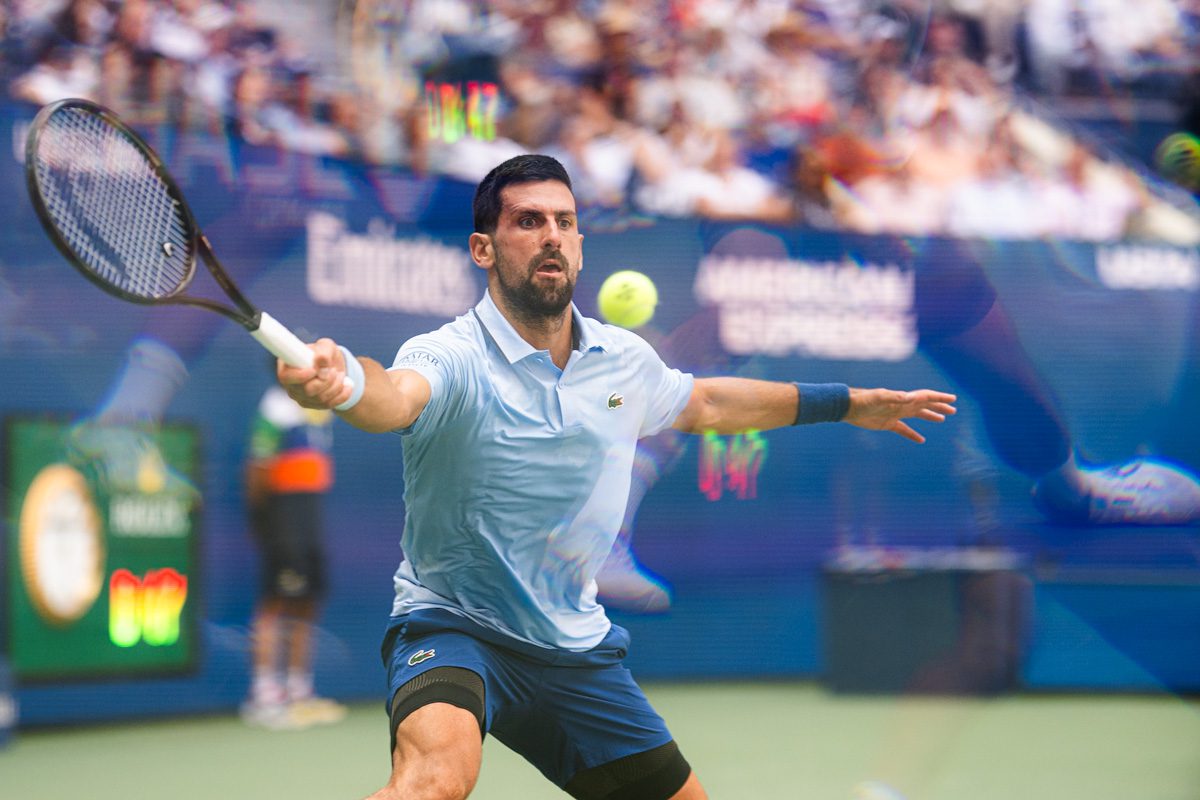
On Arthur Ashe, it’s about timing against the massive LED backgrounds, where you have to nail shutter speed and exposure so the boards don’t flicker. To freeze the action clean, I leaned on my Nikon Z9 and Nikon Z6III bodies at 1/1000 sec. When I wanted to isolate a player from the chaos, I opened up the Nikon 85mm f/1.8 or the Nikon 135mm f/1.8 Plena, which delivered some of my favorite tennis images of the tournament.
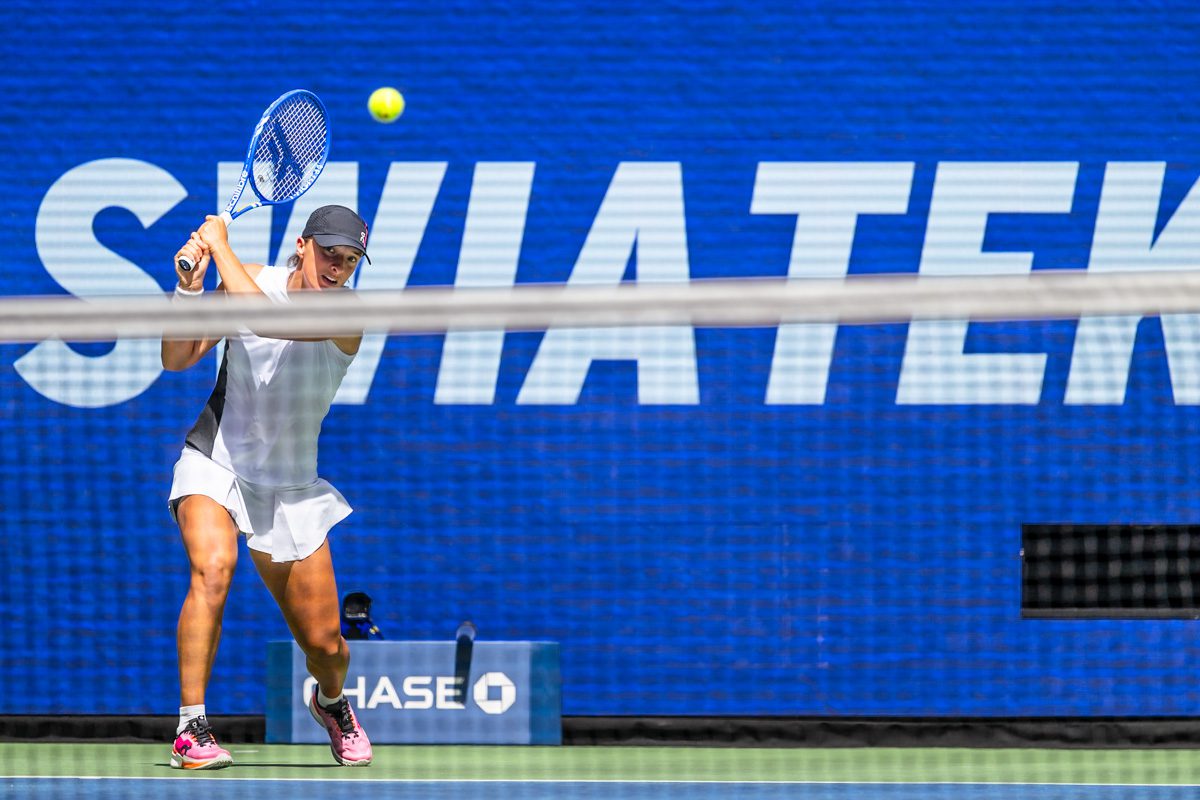
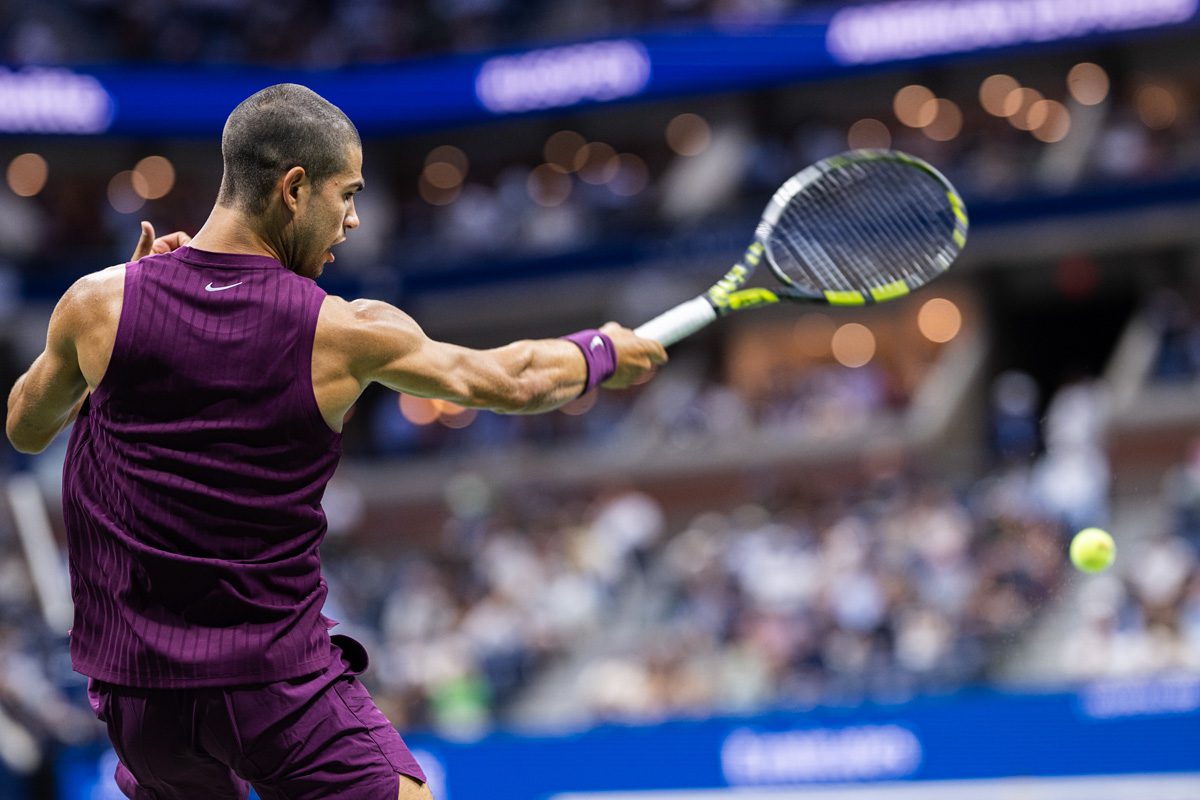
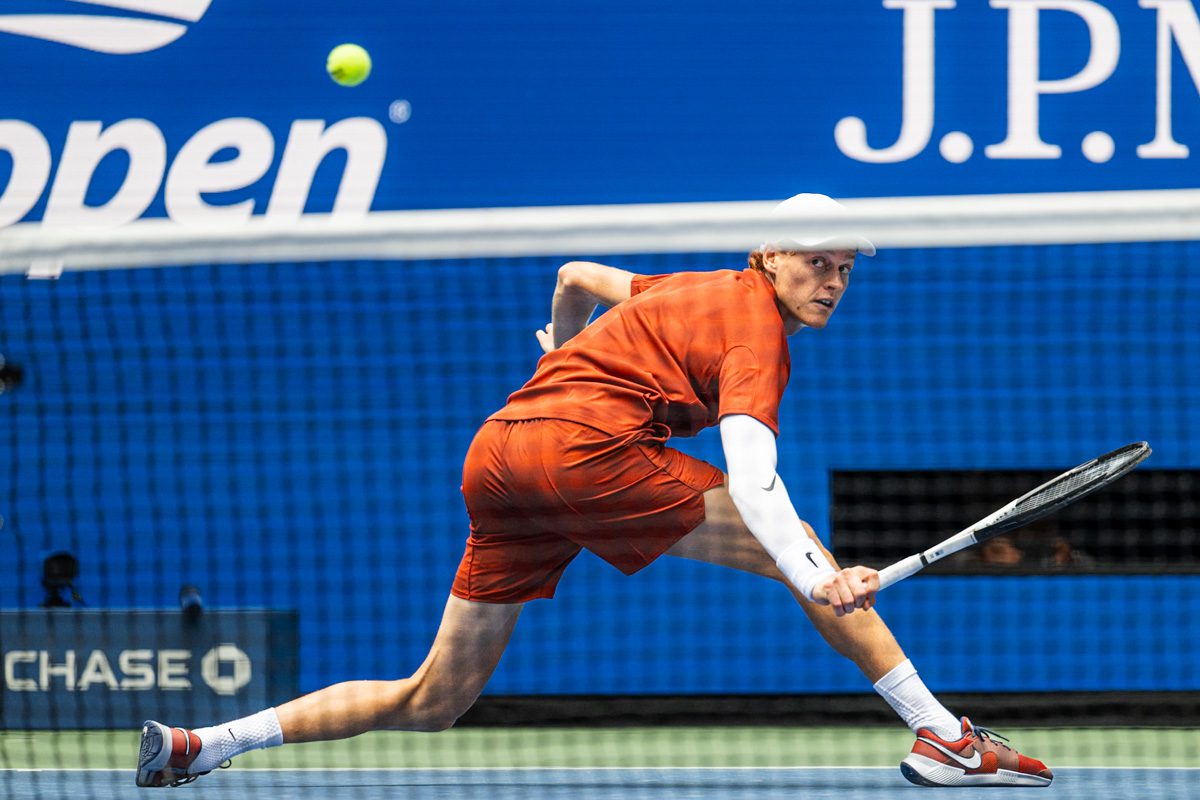
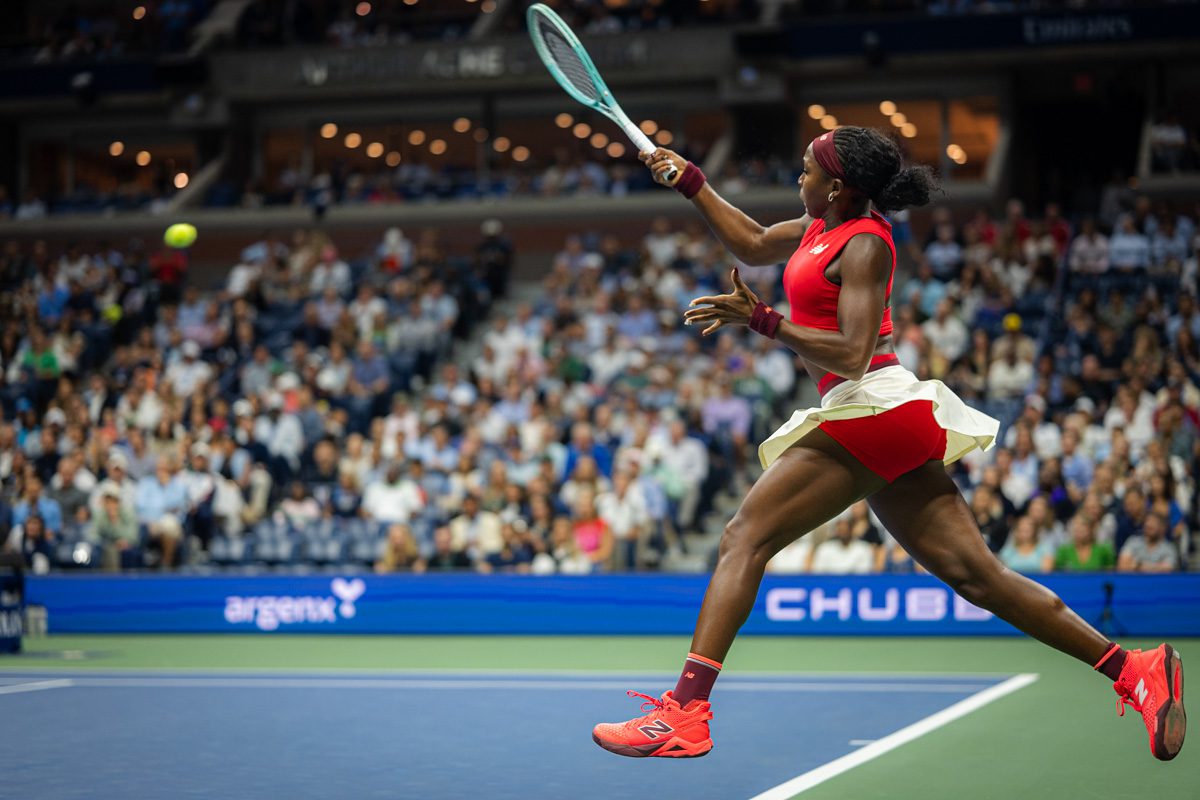
The sneakers matter too. Bright soles against the blue courts make the action pop. That low stretch from Jannik Sinner was made with the Nikon Z 400mm f/4.5 VR S — compressed, tack sharp, and full of energy. Coco Gauff midair in red? Captured with the Nikon 70–200mm f/2.8, her footwork and shoes lit up the moment.
Experimentation
I always push myself to see the Open differently. This year, I played with prisms and reflections to bend light into unexpected rainbows across the frame — pushing sports photography at the US Open beyond the obvious.

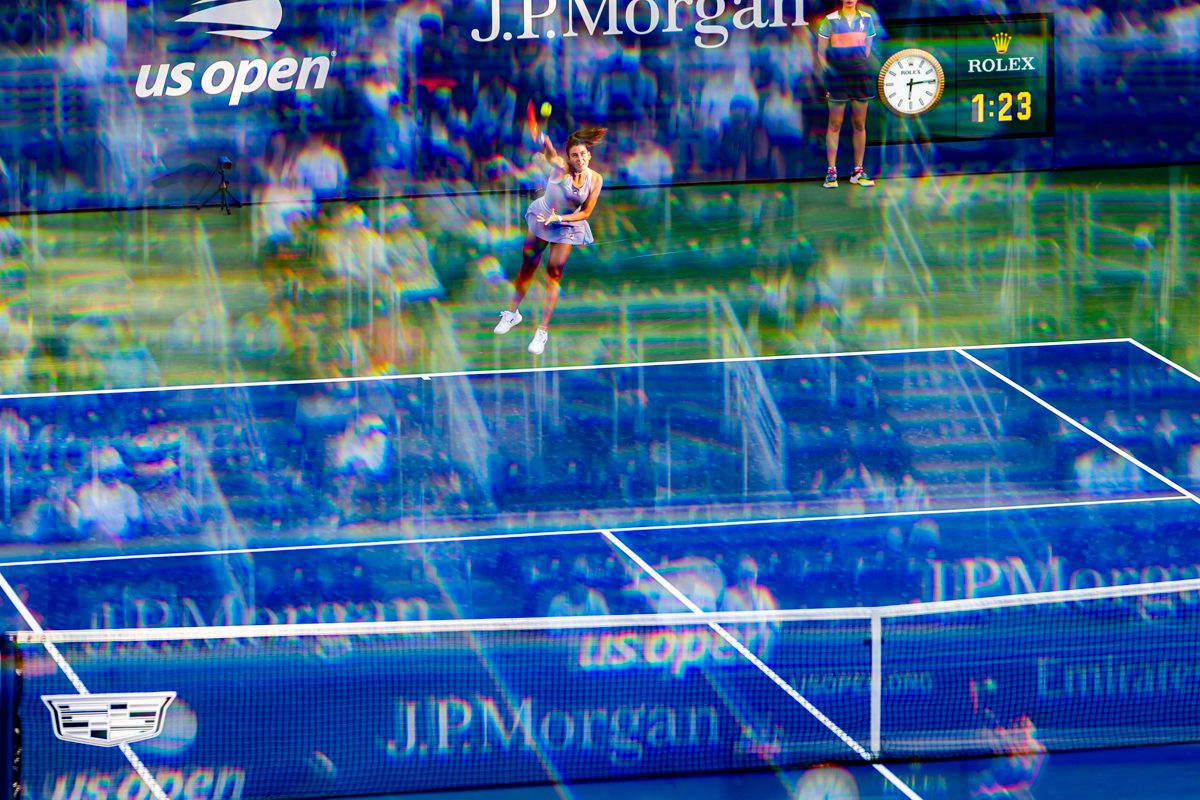
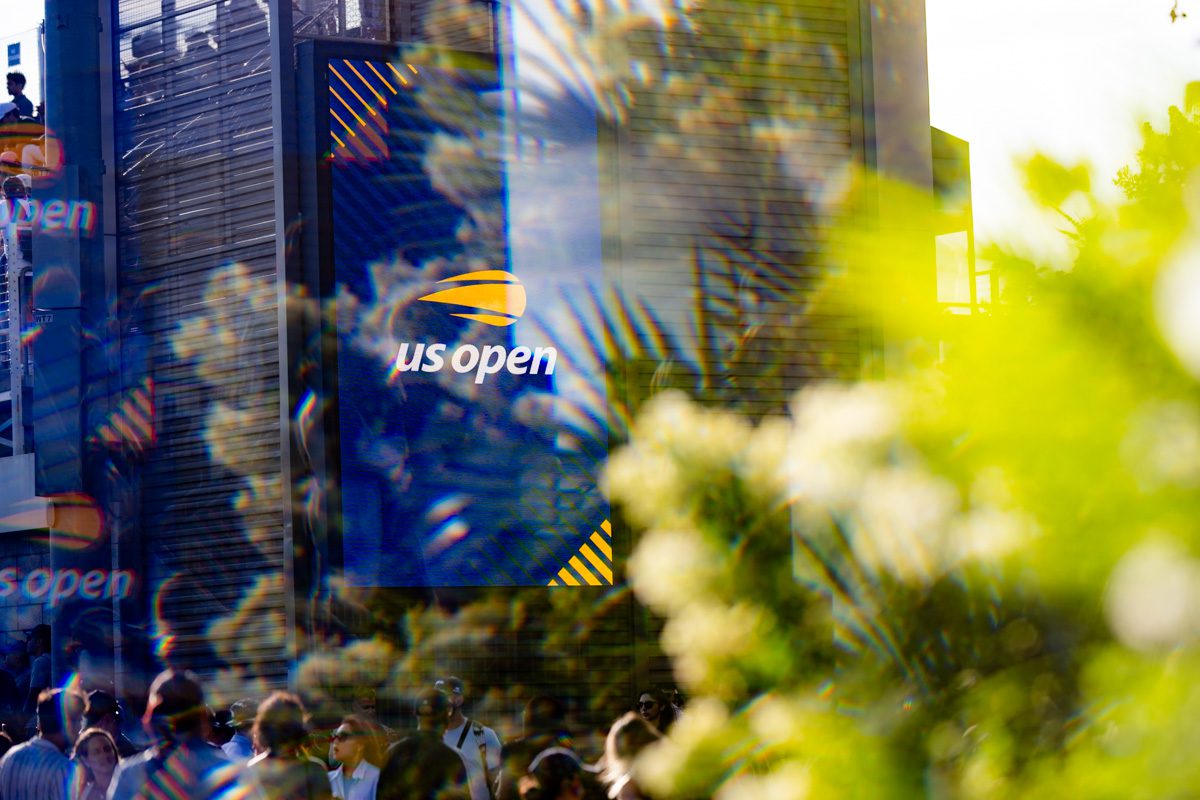
Culture belongs too. The Honey Deuce cocktail has become almost as iconic as the event itself, and fans show their personality everywhere you look.
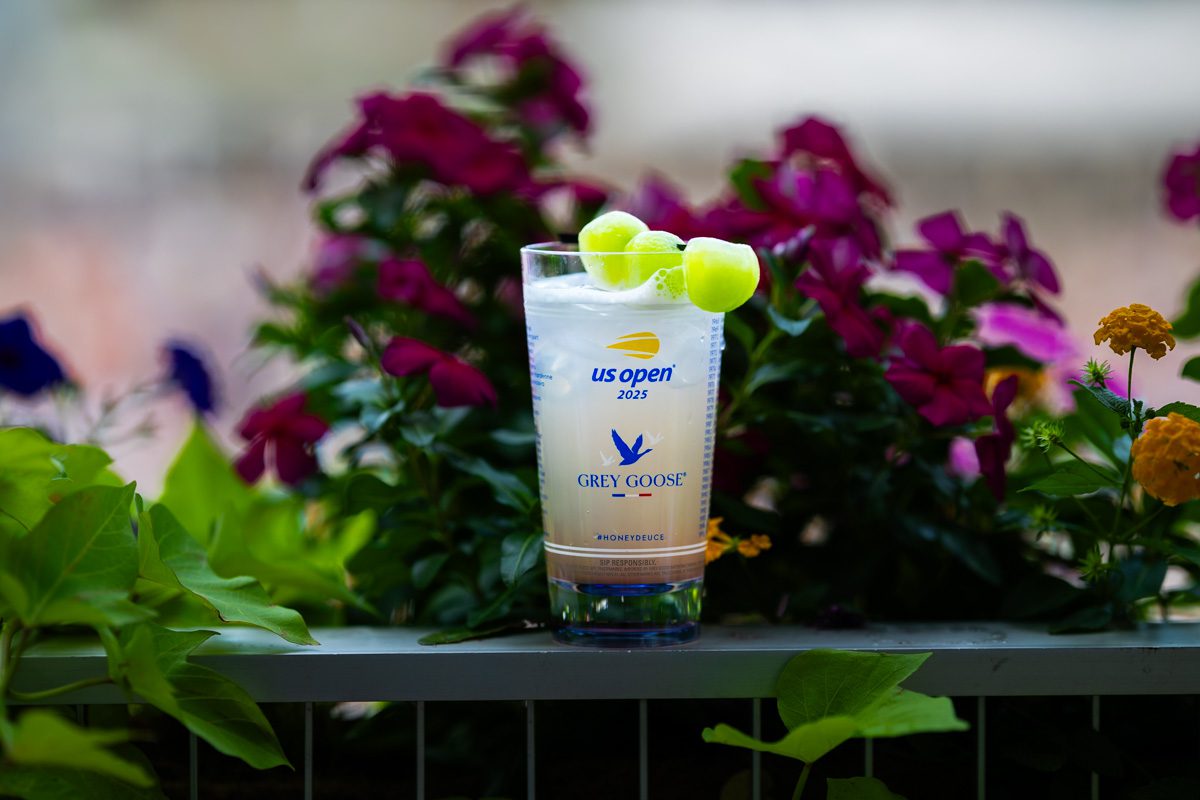
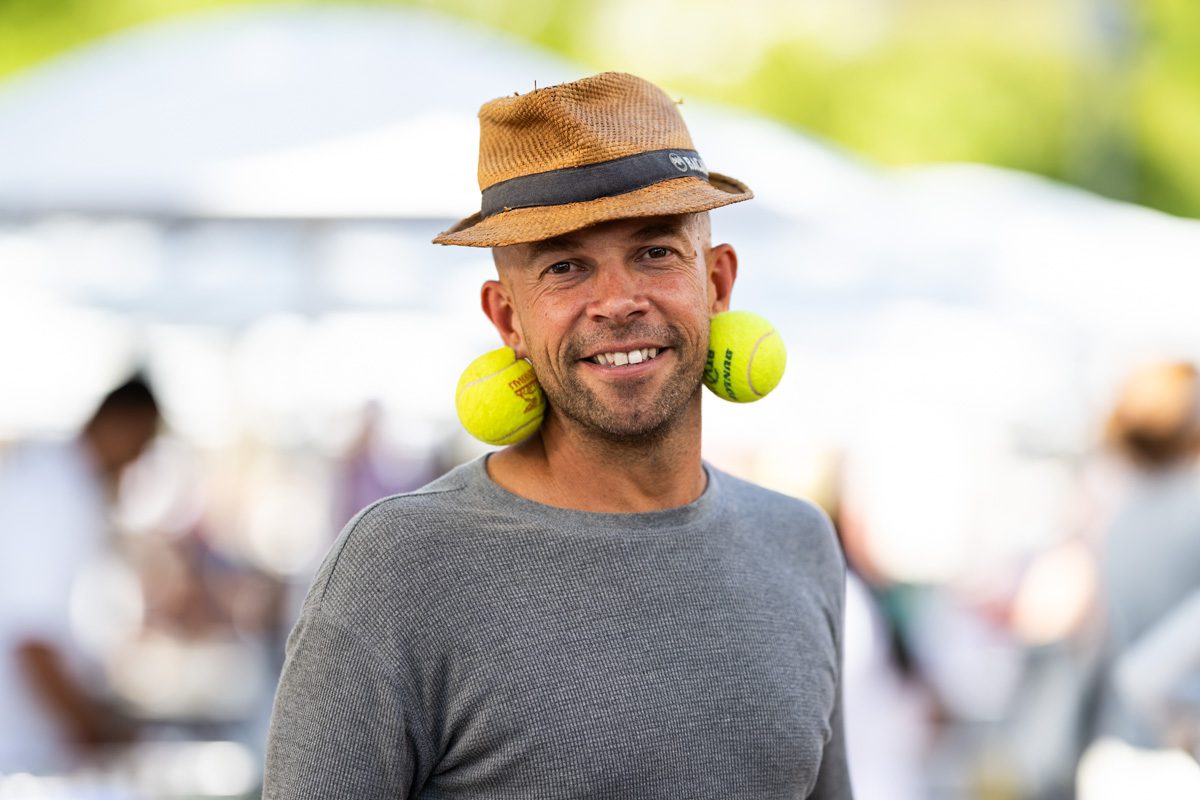
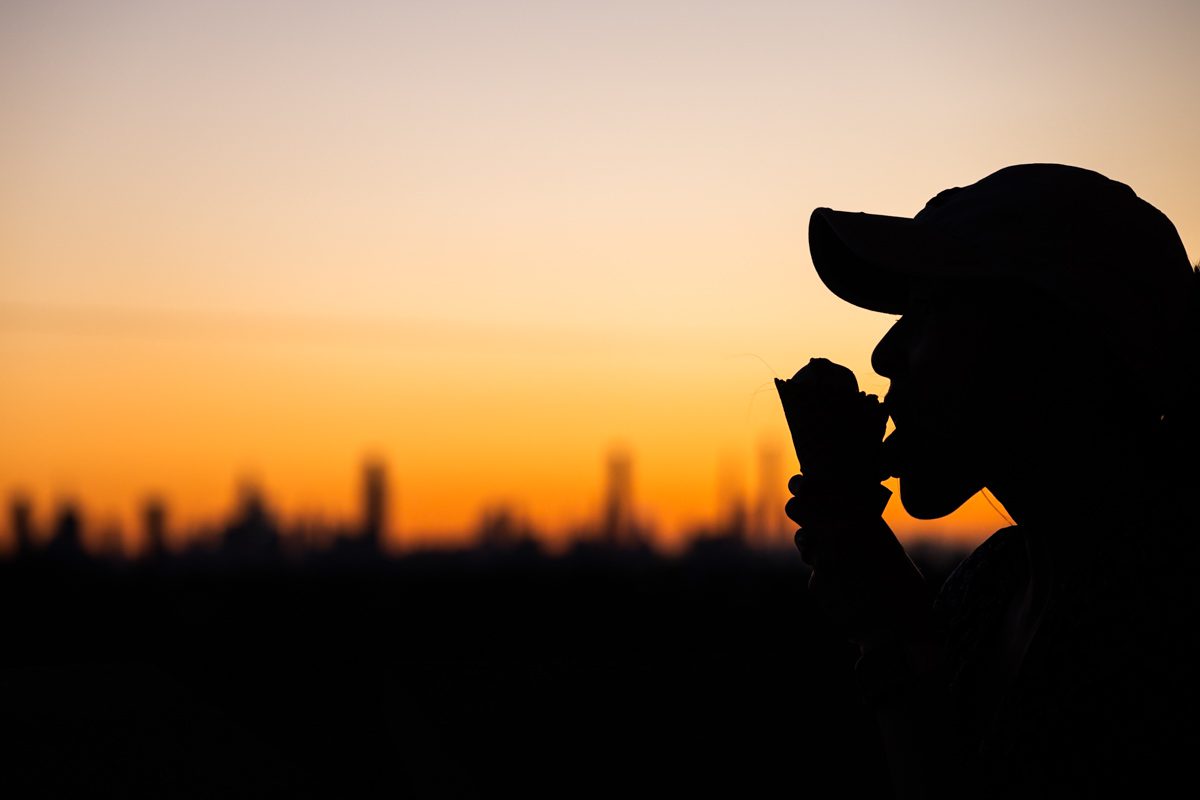
And sometimes it’s as simple as isolating the court itself.

But experimentation isn’t just about prisms or silhouettes — it’s about how I work with my Nikon tools. My Nikon Z9 bodies were the workhorses, with the Z6III giving me speed and a lighter touch when I needed it. The Nikon 135mm f/1.8 Plena, the newest baby in my family, gave me portraits and midcourt frames where the background simply dissolved away. Other times I reached for the Nikon 70–200mm f/2.8, the Nikon 400mm f/4.5 VR S, or the Nikon 600mm f/4 with the built-in teleconverter when I needed that reach.
The key isn’t just picking one lens and moving on. At the US Open, you can only move during changeovers, so you make the most of every stop. I’ll work a rally at 400mm to compress the court, then swap to the Nikon 135mm Plena from the same pit to force myself into a completely different look. That discipline — pushing myself to see variety without shifting position — is just as much experimentation as the creative filters and tricks.
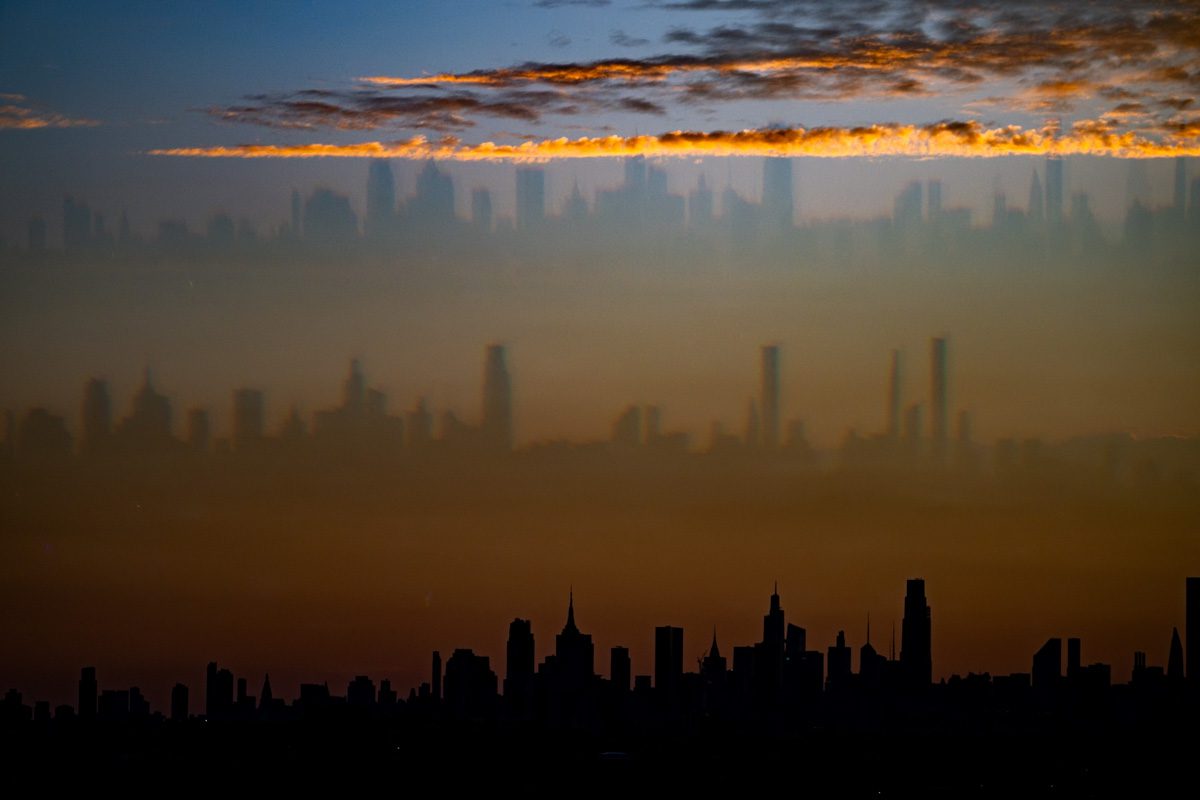
Being There
The Open is work, yes, but it’s also a privilege. I carry around heavy Nikon glass, sweat through the late-August heat, and wait for the changeovers to reposition. In those stretches, I push myself to make the most of where I am, because you don’t waste a stop at the Open.

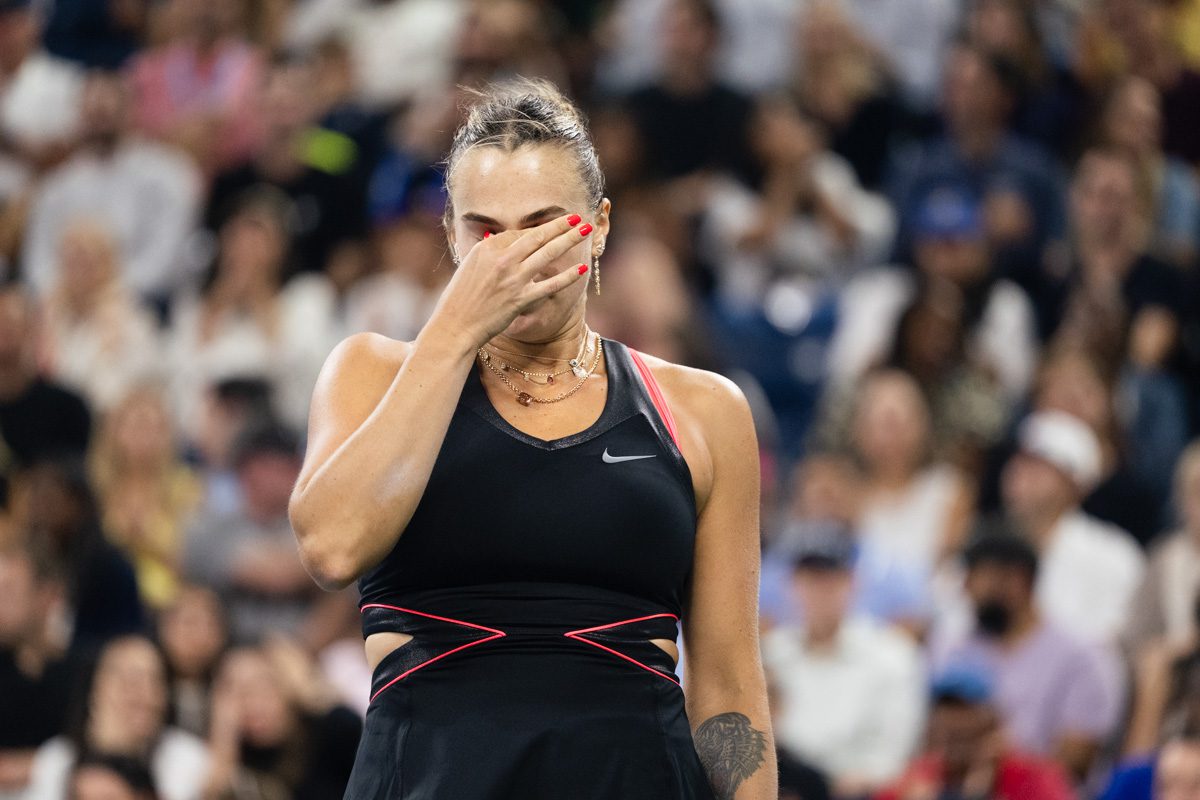
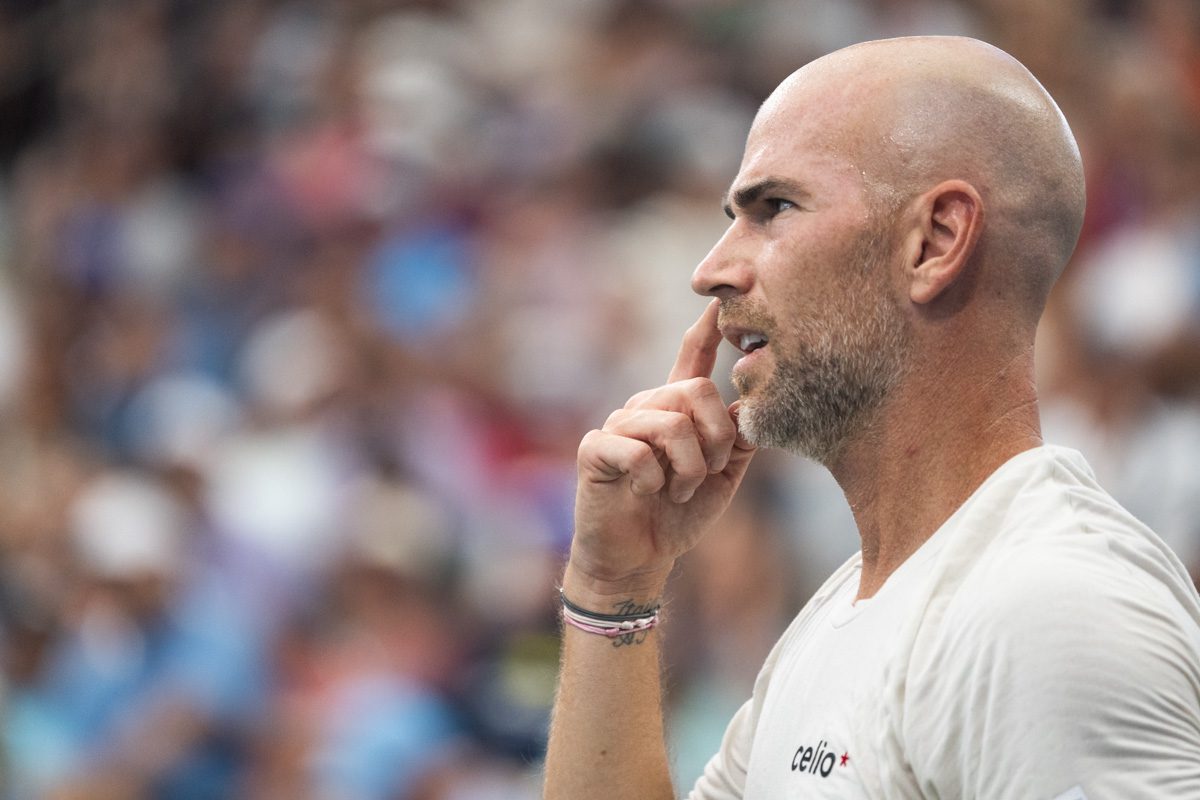
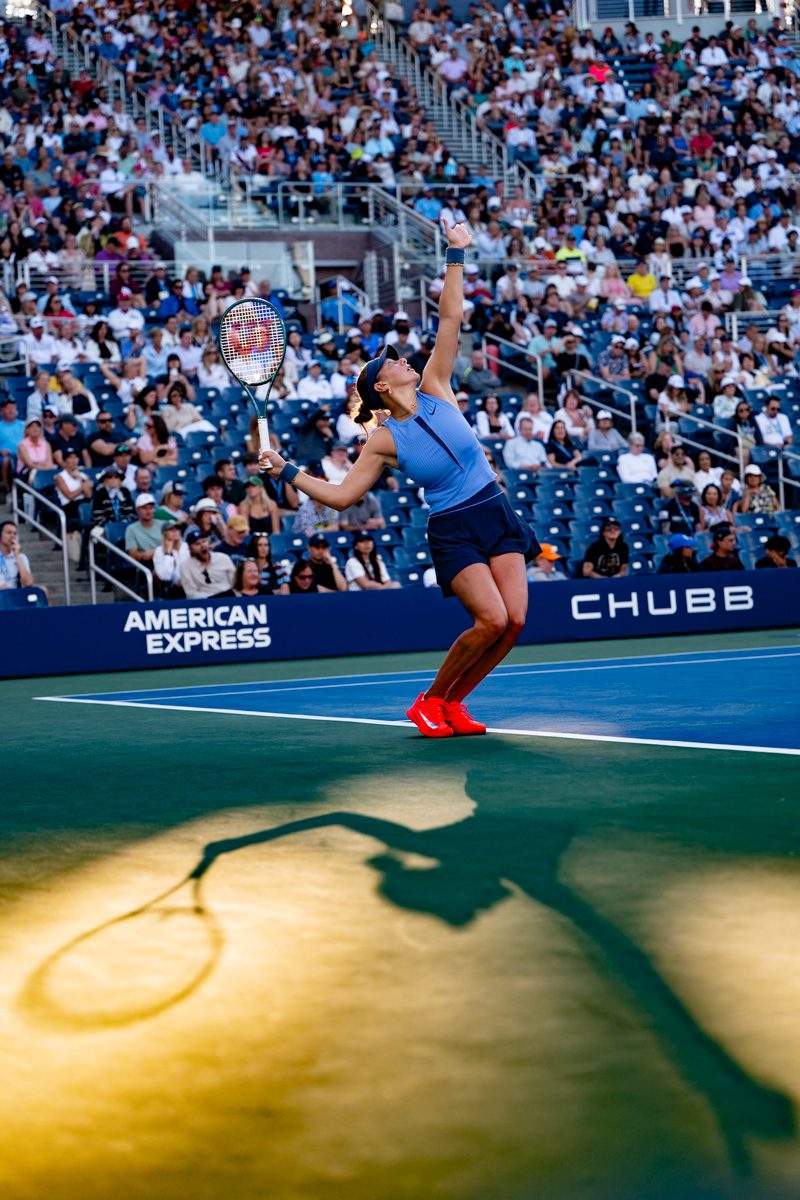
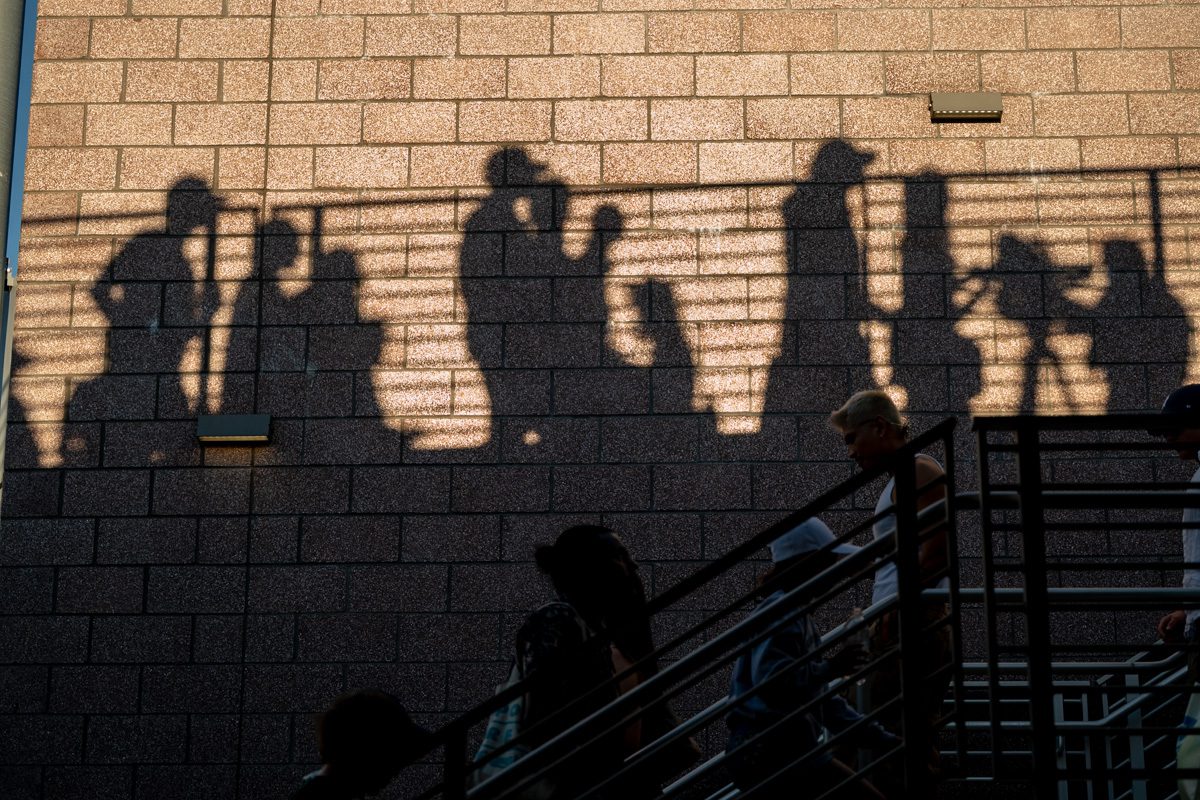
Even away from the big moments, I look for something different, perhaps poetic.
Closing Thought
If I’ve done it well, you don’t just see the tournament — you feel it.

Final Note for Fellow Photographers
What makes tennis photography so demanding is that you don’t just use your eyes — you use your ears. When I’m courtside, I’m listening to the ball as much as I’m watching the players. The sound tells me when the strike is coming, and I time my frame to the rhythm of the rally. It takes an intense kind of concentration; you’re not only watching for a player’s face to light up mid-swing, you’re anticipating it by sound.
These are tough pictures to make. The bar is high, set by so many incredible sports photographers whose images inspire me constantly. In tennis, the “holy trinity” of a great action photo is the player’s face, the racket, and the ball — all sharp, all aligned, all telling the story. It’s not true for every shot, but it’s the staple image you put at the very top of your list to capture straight away.
And when the angle isn’t right for that — when the player’s head drops too low, or the swing line doesn’t match your view — that’s when you pivot immediately. You widen out, reframe, and look for a different story: maybe the larger composition of the court, maybe the geometry of the lines, maybe the way light and shadow play against the backdrop. The key is adapting — not forcing the shot, but letting the match and the angles guide you.
That’s what makes capturing the US Open both humbling and inspiring. Every stop, every point, every changeover is a chance to create. The players bring their best; so do the photographers. And it’s that shared pursuit — of precision, of timing, of art — that keeps me striving to be better with every frame.
All Images Brian Friedman for USTA and Drawbridge Digital.